Skip to content Skip to sidebar Skip to footer

How Do You Read a Topo Map

How To Read a Topographic Map

In the one-time days of hiking, everyone learned how to read a topographic map because it was the simply selection to navigate a hike. Today we accept handheld GPS units, GPS watches, and smartphones with GPS. Most new hikers can power their phone on, look at a dot on the map, and figure out their position in a second.  And that'due south smashing. Until your device doesn't piece of work, and that's where (paper) topographic maps come in. And I know that topographic maps and non-digital navigation can be intimidating, specially for those who never used them. So in this guide, I'grand going to focus on the basics of the topographic map so that yous can look at one and make sense of information technology. I'll dive into the deeper subjects of navigation, map & compass, and overland routes in other guides.

Topographic maps are also known as "topo maps" or "profile maps."

What Are Topographic Maps?

Topographic maps interpret iii-dimensional country features into a two-dimensional (flat) map. Y'all can await at a topographic map and apace see where the hills, rivers, peaks, and valleys are. When you are navigating, a topographic map can bear witness you where you are, what route to take, and which ways are dead ends.

People generally pronounce topographic as TA-PAH-graphic and topo every bit TOE-PO.

The first country to exist mapped entirely with topographic maps was France in 1789, while in the USA, the U.S. Geological Survey (USGS)  just started the process in 1879. The first maps were based on sketches that surveyors made using analog tools to measure distance, angles, and elevations.
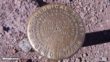
Usgs Survey Marker
Expect for these survey markers on your hike, especially on summits (in that location's a database of all of them in the The states here). They were put there by a homo that was surveying to marking an important point for reference. From these markers, surveyors tin so summate other points in the surrounding area.

It wasn't until the 1930s that aerial photography was incorporated to make the maps more accurate. Today, the USGS doesn't do human surveys anymore but instead uses satellites and drones to update the topographic maps every three years. And as you probably guessed, today'southward maps are all digital only can still be printed out.
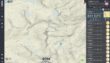
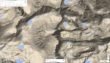
Mt Whitney Topoviewer
You can view the latest and greatest USGS topo maps on TopoViewer website. You lot can see all the map versions of the visible area on the correct sidebar. Here y'all can run across the oldest map of Mt Whitney that y'all can view online dates back to 1907 .
Mt Whitney Google Maps
Topographic maps are not just produced by governments, but also by commercial entities. Google Maps is one that y'all may take heard of. Their maps commonly employ elevations from multiple sources, including the USGS and commercial satellite data. While non openly publicized, inside sources hint that Google Maps elevations are heavily dependent LiDAR readings, measured from space with a pulsed laser that tin penetrate tree comprehend.

Are Nosotros Talking Nigh Printed or Digital Maps?

Although topographic maps were originally but printed, today they are bachelor equally digital maps or printed. When almost people say "bring a topo map with you" they are referring to a paper map. But whether the map is digital or printed, the concepts and how to read the map are the same. I'll talk more virtually the actual maps that you should use later.

How To Read a Topographic Map

There are a few key concepts you need to know to understand a topographic map. Information technology'south easier than you recall.

How To Read a Topographic Map Video

CalTopo now charges to download KMZ overlays, but yous tin can get them for free from USGS. There's a how-to at the stop of this article. I also have a sample y'all can download here.

What Are Profile Lines?
Mt Whitney Topo
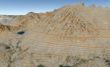
Contour lines are the cardinal to topographic maps, and are lines that mark a specific summit (like hillsides and mountains). Everything along a contour line is the same top, at least on the map. Theoretically, if you hiked along a contour line, you would never go up or downwardly.
Topo Map Index Lines
Hither'south a bang-up example of contour lines. The darker lines, marked with elevations, are called alphabetize lines. The number on an index line is the summit of that line. The tiptop is the same forth the unabridged length of the line.
Topographic Map Example 03
The fainter intermediate profile lines between alphabetize lines are not labeled, merely instead follow the contour interval. Printed maps will tell yous the interval on the map key. In this case, it'due south fourscore feet, so every fainter line is 80 feet higher or lower than the ane next to information technology. About topographic maps have an index line for every 5th line.
Topo Map Contour Interval
If you take a printed map, look for the contour interval listed on the bottom. If you lot are looking at a digital map, yous can ordinarily click (or right-click) on a point to get the elevation based on the contour lines.
Topo Map On Sat Map
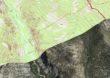
Here's a flat topographic map laid over a Google Map 3D model. Yous can see that the lines friction match the slope of the mountains and canyons.

Want to overlay topographic maps onto a 3D Google Earth model so you tin can explore yourself? And even put your hike route on there? I'll bear witness you how at the stop of this commodity.
Topo Map On Sat Map Slopes
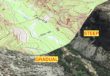
The closer the profile lines are together, the steeper the slope. The wider they are apart, the more gradual the slope.

While contour lines may "stack up" on a steep cliff, they otherwise never cross on another.

Topo Map Rock Outcrop
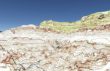
And remember that contour lines are models of the world. If a slope has a 60 foot cliff similar this, information technology won't show upwards on a map with fourscore-pes contours. Photo Wikimedia
Trails On Topo Map 3d
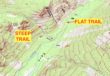
Hither's a topo map laid on pinnacle of a 3D surface in Google Globe. You can run into that the trail which crosses no contour lines is flat, while the trail that runs across the profile lines is steep.
Trails On Topo Map Top Down
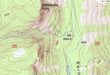
Hither'south a regular, top-down view of the same surface area from the final image, equally y'all would see it on a topographic map in second.

Reading Land Forms From Profile Lines

Let's start with the basics, a flat area, a steep slope, and a cliff.

Valley In Topographic Map Top Down
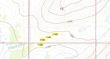
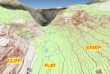
In the centre, the contour lines are non-real, meaning the area is apartment. On the right, the contour lines are close to each other, pregnant a steep climb. And on the left, the contour lines are stacked on top of each other, meaning a vertical cliff. Note the trail to the left Mile 145, which zig-zags up the slope. A zig-zagging trail is usually switchbacks, and is a inkling that the climb is steep.
Valley In Topographic Map
Here'south another view of the last paradigm, this time overlaid onto a 3D surface area.
Topo Grand Canyon 2
And because most people wonder about information technology, here's the classic example, the Grand Canyon. Notice how there are many levels of steeply stacked contour lines betwixt the top and the Colorado River below.
Topo Grand Canyon
Here'due south what the contour lines wait like mapped into Google Earth, looking upwardly from the river to the elevation. Lots of close profile lines mapping onto cliff walls and steep slopes.

Mountain Pinnacle

Mt Harwood
Hither's the mountain peak of Mt Harwood. Notice how the contour lines go smaller and more circular as they achieve the meridian. In this case, the peak has also been surveyed and has an elevation, 9552 feet.
Mt Harwood 3d
Here'southward Mt Harwood in a 3D view. Too, note that the wider top circle depicts a wider, flatter summit.

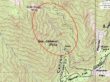
Double Acme

Mt Baldy Topo

Mt Baldy Topo 3d

Gully / Ravine / Coulee

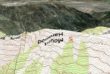
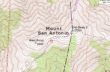
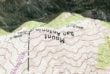
San Antonio Canyon
Look for V or U-shaped contour lines to spot a canyon or gully. The more than like a V that the contour lines are, the steeper the walls, while a U-shaped formation has less steep sides. These formations normally accept a creek or water sources flowing down them every bit well. The U or 5 volition always point uphill.

San Antonio Canyon 3d

Ridge Trail

Pct On Ridge
At first glance, it looks similar any trail in this area volition involve climbing. Merely if y'all wait carefully at the Pacific Crest Trail, you lot'll see that it almost follows the contour lines exactly, meaning that it's (theoretically) pretty flat.

Saddle / Gap / Notch / Pass

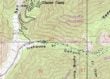
Icehouse Saddle
To spot a saddle or laissez passer, look for an hourglass shape on the contour lines.

Icehouse Saddle 3d

Cirque / Bowl

Mt Laconte
The natural amphitheater look of a bowl or cirque can be spotted by looking for steep and circular profile lines.

Mt Laconte 3d

Features on Topographic Maps

Features On Topo Map
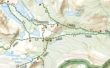
Luckily most features on a topographic map are easy to interpret. Here you tin can run into roads, trails, streams, and buildings.

I'm not going to requite yous an exhaustive list of every feature on a topographic map in this guide, but I will betoken out some of the more useful features to be aware of on your map. If yous want to deep dive into all the features, the USGS has a comprehensive map key here.

A topographic map will non prove all the terrain features. Landscapes change and what a mapmaker can fit on a map is limited.
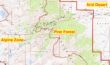
Topo Map Vegetation
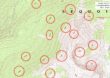
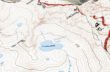
Solid light-green ways that the area is mostly covered by TALL vegetation such every bit a forest. White at the top of contour lines means an alpine zone where the trees have stopped. White in a flat area means a lack of tall vegetation, which could be grass, dirt, desert, etc. Looking at the elevations on a topo map will give the green areas some context.

A white area likewise doesn't hateful a consummate lack of vegetation. At that place could be grass, meadows, or fifty-fifty overgrown vegetation in a gully.

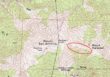
Topographic Map Water
Blueish features are ordinarily water, as y'all can see by the lakes and streams hither. When you see blue contour lines, it indicates a glacier. Standard contour lines are brown.
Trails On Topo Maps
Curt black dashed lines are trails. Short blackness double lines are dirt roads. Do not brand the mistake of thinking that the other dashed lines, which are boundaries, are trails.
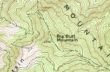
Big Butt Mountain
Who named all this stuff? The U.S. Board on Geographic Names was prepare up after the Civil War to standardize names on maps. Anyone can petition them to have a landform named, including the public. Yous merely need some provenance to support your claim.

Altitude on Topographic Maps

I'll talk about scale before long, but for about beginners, a key aspect in reading a topographic map is understanding how far apart things are.
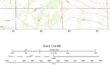
Distance Scale On Topo Map
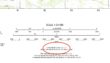
At the bottom of well-nigh every map is the scale measurement. Fifty-fifty digital maps will have a scale (that changes equally you lot zoom) on the lesser.
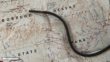
Measuring Distance With Shoelace
One time you know what the scale is, y'all're going to want to measure the trail. The but problem is that trails more often than not twist and plough, while the scale is straight. A corking trick is to lay a lanyard or shoelace along your route. Then you can straighten it out and lay it against the calibration key to observe the distance.
Nat Geo Topo Map
Some maps, like these from National Geographic, include the trail distances on each segment, which is very handy.

A mile, or 5280 anxiety, is derived from the altitude that Roman soldiers would walk in 1000 (double) steps. The Latin word for thousand is mille, which the discussion mile is derived from.

Using Printed Topographic Maps

As I mentioned earlier, there's a solid corporeality of hikers who just use a GPS, whether on their phone or on a dedicated GPS unit of measurement. If you lot fall into that category of hiker, I strongly recommend bringing a printed topographic map with you in instance your device fails in the backcountry. Even if you don't know the more advanced skills like orienteering, navigating, or route finding, the paper map is even so helpful.

You lot'll likely know where yous desire to hike. And now you lot know how to read a topographic map. From there you tin look at the map, your surroundings, and your expected position, and effigy out a grade of activity if your GPS dies. For the cost of a $12 map, you take an invaluable resources if the electronics neglect.

Here's what I recommend for those who are GPS-dependent or are beginners.

  • Buy a printed map for the area that you are hiking.
  • Await over the route on the printed map earlier you become.
  • Fold the printed map to bear witness your route and bear it in your pocket equally you hike. Periodically take the map out and encounter if you tin can orient yourself. Trail junctions and physical landmarks are a good place to practice this.
  • Utilize your GPS to confirm your position.

This is a good workflow to first using a paper topographic map. From there you tin movement onto more avant-garde skills.

Picking A Map At the Right Scale

To brand things simple, think of map calibration equally how much detail is covered on a map.

Grand Canyon Nps Overview Map
On a "small scale" map like this NPS visitor map, which covers the width of Grand Canyon National Park, at about 300 miles, the level of detail is minimal. In other words, small calibration is small (or less) detail.
High Detail Level Map
On a "large scale" map like this topo map, more detail is shown. On a map like this, each inch is virtually ⅓ mile. "Large calibration" equates to a big amount of particular.

The mutual sizes for printed hiking topo maps are:

  • 1:24,000 – The USGS has mapped most of the The states at this calibration, and they're often referred to as "vii.v-infinitesimal quadrangle" or "quad" maps. They cover an surface area of almost 6 by 9 miles, and every inch is most a 3rd of a mile. If you get them printed out (you can buy them online), they come on large 22 x 27 inch paper that you need to fold up. And for longer hikes, you lot will likely demand multiples.
  • 1:50,000 to ane:100,000 range – For most hikers, this is the sweet spot for a topo map, and the scale that well-nigh commercial maps (like Tom Harrison or National Geographic) come in.  At 1:63,360 scale, 1 inch equals 1 mile. Generally these maps come folded for easy employ.

Decoding calibration is easy. The first number is an inch on a printed map, the 2nd number is the number of inches it represents in real life. So a 1:24,000 map would bear witness 24,000 inches (0.38 miles) for every inch of paper.

Map Recommendations
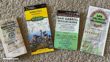
Good Paper Topo Maps
While you tin custom order maps from the USGS, information technology'due south normally easier to buy a third-party map that's designed to embrace a specific area like a park or mount range, and which are often water-resistant.

Here's what I would recommend if you're just getting into carrying a paper map.

  • Buy a foldable map with hiking trails that has a scale in the ane:50,000 to ane:100,000 range. At that place are regional map brands like AMC, Tom Harrison, and Light-green Trails. So there are maps with national coverage such equally National Geographic.
  • You tin can as well order USGS quads directly for a reasonable toll. Call back that yous may need to buy multiples to cover your hike. And not all trails are these maps. They are, even so, probably every bit detailed as you lot can get when it comes to topography. I'll use USGS quads when I'm going overland, only otherwise I'll utilize a tertiary-party map for a region.
  • The USGS maps are free, and you can download them and print them yourself. If you exercise, I'd recommend water-resistant newspaper, which you tin can buy yourself or send to a impress store like Fedex / Kinkos.
  • You tin can utilise a website similar CalTopo to create a custom area and print out scanned topo maps.

Digital Maps

I mentioned before that topographic maps were available digitally too. Digital maps throw a little wrench into the idea of scale. If 1 inch equals ane mile on a 1:63,360 map, what is 1 inch on a screen? What I can see on i inch of a screen on a phone from 2010 is much different then on a high-resolution screen from today. And you can zoom in and out on digital maps likewise. And then how does that all work?

It's basically a matter of particular that'southward included. For example, Garmin sells 24k (roughly equivalent to a quad topographic map) and the 100k TopoActive maps. The 24k maps include more detail than the 100k maps. But for near free digital maps, the level of detail is as detailed equally it can be. And most modernistic map browsers let you lot tweak the level of detail on a map or exercise it automatically for you.
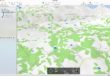
Garmin Basecamp Map Detail
In the Garmin Basecamp program you can use the slider at the lesser to control the level of detail that you view on a map.

Digital Map Options

You aren't limited to the maps that that USGS produces when it comes to digital topographic maps (which you tin print). Tools similar Gaia GPS (disbelieve code here) and CalTopo allow you to view alternate topo maps and print them. You can fifty-fifty customize the maps to include other layers such as snow cover, conditions, etc. Information technology'south very powerful. Permit'southward look at some of the better digital topographic map options, which you can print out or send to your device.

CalTopo – Mapbuilder Topo
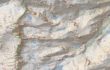
Topo Mapbuilder Topo
The default map in Caltopo is the Mapbuilder Topo, which is based on several sources and updated 4 times a year. This is a solid map that as well includes distances betwixt trail segments.

CalTopo – Scanned Topos

Topo Caltopo Scanned
Caltopo besides has scanned USGS (in the USA) topographic maps. They may not be the latest, and they frequently don't reflect all the trails, but they are your best bet for landform names (like creeks, canyons, etc.).

CalTopo – Forest Service

Topo Caltopo Fstopo
In the onetime days Usa Forest Service maps had many more trails than the USGS maps, just today they are almost identical. Many people prefer the cartography choices on the Forest Service maps; it's less cluttered and busy than the USGS maps. The Wood Service maps don't take the UTM filigree and do accept all the Woods Service road numbers labeled, which is helpful.

CalTopo – TF Outdoors

Topo Caltopo Tfoutdoors
The TF Outdoors map is a variation of the Open up Street Map that's focused on the outdoors. These maps more often than not have lots of trails on them, but the quality of the trails can exist variable. Sometimes the trails are pocket-sized use trails, and other times they tin be technical scrambles. For case, in this screenshot from Mt Whitney, the TF Outdoors map shows the Mountaineer's Route, which is non on the earlier maps and is not really a trail, at least in its tough ending. Some folks might recall they tin but take a nice hike up the line on the map, which is not the case without more context.

Yous'll also discover that this map has a combination of contour lines and shading, which is a computer generated fashion to illustrate slope, usually found on digital maps.

CalTopo – Global Imagery + Mapbuilder Topo
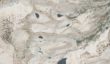
Topo Sat With Caltopo
Another powerful map is combining the Global Imagery satellite map with the Mapbuilder Topo overlaid at 50% opacity. With this view you can see the natural features with the contours and trails on elevation.

Gaia GPS (Native Maps)

Gaiagps Native Maps
The (new) native maps in Gaia GPS are probably my favorites. They're based on multiple sources and the cartography has just the correct level of particular and contrast for the outdoors.

National Geographic Digital (Gaia GPS)
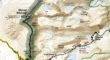
Gaiagps Nat Geo Topo Map
This is the digital version of the paper maps. While not as detailed every bit the Gaia GPS native maps, they're however like shooting fish in a barrel to read and neat for navigating, especially over a larger area. These maps are available with a premium Gaia GPS membership.

AllTrails Native

Altrails Topo Map
AllTrails has proprietary topographic maps which are good. If you're using the AllTrails app already, more often than not your best bet is to apply the default maps (pictured here).

Exploring Topographic Maps With Google Earth

The best style to really understand a topographic map is to take information technology with yous on a hike, find your position. expect at map, look at the features around you lot, and interpret the map features to real-life in existent-fourth dimension. But if you want to practice at home (or when avoiding work), there's a cool fox that you can exercise with Google Earth that overlays topo maps onto the Earth's contours. Information technology's a bang-up way to prep for a hike and learn topo map features at the same time.

Footstep 1: Visit CalTopo and Get Your Topo Map

Note that CalTopo now requires a Pro account to download KMZ files. I remember it'due south worth it, just if you're non intersted, y'all can also download them for gratuitous from USGS. I'll bear witness that in the side by side stride.
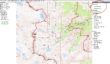
d Topo Map Maker 1
Go to the Caltopo website and detect the area that you want to explore. Make sure yous accept "Scanned Topos" selected as your base layer.
Caltopo Print Current Google Map
Click on Print then Garmin Custom Map.
d Topo Map Maker 3
Select the expanse to download with the crimson bounding box, then click download KMZ.

Step 1-Alt: Get Free KMZ Topo Maps from the USGS

If you want to download the topographic map files for free, only caput over to the USGS Topoviewer site.
Usgs Custom Kmz Download
Select the area that you desire and then choose a map version on the correct. Once you lot choose your map, look for the KMZ link similar I've got circled here, just nether the map name.

The download from here may give you two files. Open up them both in Google Earth to discover which one is the topo map.

Step two: Open the Topo Map in Google Earth

For this step, you'll need to download and install the free Google Earth program.
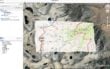
d Topo Map Maker 4
First Google Earth and so load the KMZ file that you downloaded before.
d Topo Map Maker 5
Zoom in with the controls on the right. Clicking on the small upward pointer volition movement your perspective closer to the basis then that you're looking up.
d Topo Map Maker 6
Go all the way down and look all the way up for an "on the footing" perspective." I've included the regular Google satellite photo on the left and then you tin can see how the topo map adheres to the terrain.

You lot can load multiple KMZ files into Google World. Just download multiple areas in CalTopo and open them with Google World.

Step iii: Load Your Hike GPX File

If you are examining the area of a hike you're going to do, you can load your GPX file into Google World and it will be overlaid on your KMZ files.
d Topo Map Maker 7
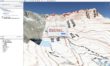
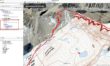
When y'all open the GPX file with Google Earth, brand sure that you lot take "Create KML Linestrings" checked.
d Topo Map Maker 8
Observe your runway on the left side and double click on information technology. The view will adjust to encompass the rail. I find it helpful to uncheck the "Points" to keep the view uncluttered.

Accept an thought on how to make these guides meliorate? Leave me your thoughts here..

Related Guides

Popular Articles

nguyencappen.blogspot.com

Source: https://hikingguy.com/how-to-hike/how-to-read-a-topographic-map/

Post a Comment for "How Do You Read a Topo Map"